a new grad guide to finding computational biology jobs
my experience exploring the field & a recruiting cycle retrospective
Hi, I’m Karthik. I’m a recent graduate of UC Berkeley and I work as an engineer at the Allen Institute for Cell Science in Seattle. At Berkeley, I majored in computer science and spent a lot of my time there working on biophysical models of cells in David Drubin’s lab. The flexibility of college was incredibly liberating, allowing me to bounce from idea to idea each semester both in coursework and in research without constraints.
I wasn’t sure what the right next step for me was as I entered my senior year. I wasn’t ready to commit to biology/computational biology PhD programs or to work in tech and leave biology behind. I wanted to understand what all the options were for a new grad with a computational biology background, and my primary goal was to find a job where I could continue to use computational tools to work on fundamental biological questions. I was hoping for some time and work experience to figure out what I was looking for long-term and wanted to have some agency over what I worked on in the meantime.
From twitter posts and job listings I’d found, I knew these types of jobs were possible and available, but it wasn’t going to be trivial to find and to apply to them. I spent the next 6 months exploring this space, applying, and interviewing. The rest of this guide is going to share my experiences and some of the things I’ve learned along the way.
Finding jobs
twitter & what to work on
Before I talk about twitter and how I tried to find jobs there, I want to try to define what my experience was and the types of people I followed.
VCs and VC adjacent (Petri Bio, 8VC, The Longevity Fund, A16 Biotech, Nucleate, Cantos)
There’s a lot going on in the biotech entrepreneurship and VC space and I’m not sure I entirely found my footing here. But following people like Tony Kulesa and Michael Retchin helped me orient myself and find cool opportunities.
Biotech startups (Loyal, 64x Bio, Octant, Cambrian)
I looked for startups that were building things that seemed interesting to me and had use for engineering or data science in some capacity. I found a lot of these companies from VC investment lists and just generally spending a lot of time on Twitter.
Academic PIs and non-profit research institutes (CZ Biohub, Altos Labs, Allen Institute, Broad Institute)
Traditional RA positions are available at labs across the country. I also saw a surprising number of research technician, software engineer, and data scientist positions at many privately funded/non-profit research institutes across the country.
For choosing jobs, I’ve long felt that the Hamming question (What are the important problems in your field, and why aren’t you working on them?”) can be misleading for young people given that most of us can’t yet see the forest from the trees. Being an RA in a lab with a famous PI isn’t worth it if you’re just an extra set of hands to a post-doc who isn’t invested in your growth and development. The breadth of opportunities in biotech and computational biology right now can be overwhelming but taking the time to sieve for the work that truly excites you is worthwhile. And applying broadly can help you figure out what you don’t want to do. Once your interest is piqued, it’s just about finding a supportive environment and people you’d like working with.
While there are a number of possible job titles available for a new grad with computational biology experience (software engineer, data scientist, VC/analyst, research associate), it probably doesn’t matter too much what you end up with as long as it’s not constricting (infrastructure engineer, etc). Personally, I didn’t consider salary to be a big factor in my decision making either but the more technical your job title, the better you’re likely to be paid. In my experience, RA positions range between 50K-70K and engineer positions between 80K-120K. Location and type of lab matter a lot for this though so I wouldn’t be surprised if your mileage varies.
Another great resource for building your list is the bitsinbio slack channel which is a self-described “A community for software enthusiasts and builders in biotech”. The ‘jobs’ channel is updated pretty often with new opportunities, each major city has its own dedicated channel and meet-ups, and the q/a channel allows for a deeper insight into certain companies
Resources
8VC Life Sciences (some life sciences startups to apply to)
Cold Emailing
A pivotal moment early into my job hunt was coming across this blog post: https://guzey.com/follow-up/. The landscape of the job market is vastly different than that of college and graduate school applications, particularly in biotech. There are few big name companies to apply to - other than big pharma - and the job requirements are much more specialized. Job postings are often for a particular immediate need for a company, rather than trying to meet a quota. Notably, there’s also a number of job postings that aren’t posted - those that haven’t made their way out of the minds of scientists and engineers who need support but just haven’t prepared a list of their requirements.
This is a powerful opportunity for someone looking to get their foot in the door. The first step is to just to prepare a strong draft of a cold-email where you: a) demonstrate value and b) express genuine interest/curiosity in the company/lab you’re applying to. I’ll admit the ethics of this are certainly unclear but I used a mail-tracking extension early on to test this out and found that my emails to founders/PIs/CTOs were almost always read multiple times. From there, I would receive a response ~30% of the time, largely dependent on how high profile this person was. But if I persisted and sent a second or third email, I would hear back with a clear rejection, a request for more of my information, or scheduling of a chat. Once there is some mutual interest, I think there will be a natural determination of fit on both sides, but too many people do themselves a disservice by not truly putting themselves out there.
Research Connections
I wanted to gain a deep understanding of what was out there, what each job entailed, and what it would mean for my career long-term. But one of the biggest challenges I ran into was trying to predict how I was going to fit in a new field. A big takeaway from my exploration was that biotech contains a number of microcultures with their own conventions - similar to stereotypes of different specialties in medicine. I was initially drawn to the idea of biocomputing and the potential for building tools/software to accelerate discovery in biology but my conversations with people in the field (LatchBio, DESRES) showed that we had very different goals. My priority was the search for new biological insights and using computational tools to do this, which I soon realized was much more aligned with traditional academic research. Many people and companies in the “biocomputing” sphere saw themselves as disruptors - trying to bring a new energy and engineering mindset to biology.
this is my least favorite kind of tweet

Exploration at pivotal stages is very important, but past experiences are usually the most powerful predictor of future performance. For those with academic lab experience, take advantage of research connections - look at where lab alumni went and have informal discussions with grad students/postdocs to learn more about what’s out there. People like helping people, especially people early in their career who could really benefit from an introduction or reference. And you have exponentially more 2nd degree connections than 1st.
In my own experience, talking to my research mentor helped me find the opportunities I was most excited for. It made it easier to get my foot in the door given that I could reference a shared connection or get an introduction. The biggest benefit though is that it helped me find places to do research that aligned with my past experiences and environments I previously had enjoyed working in.
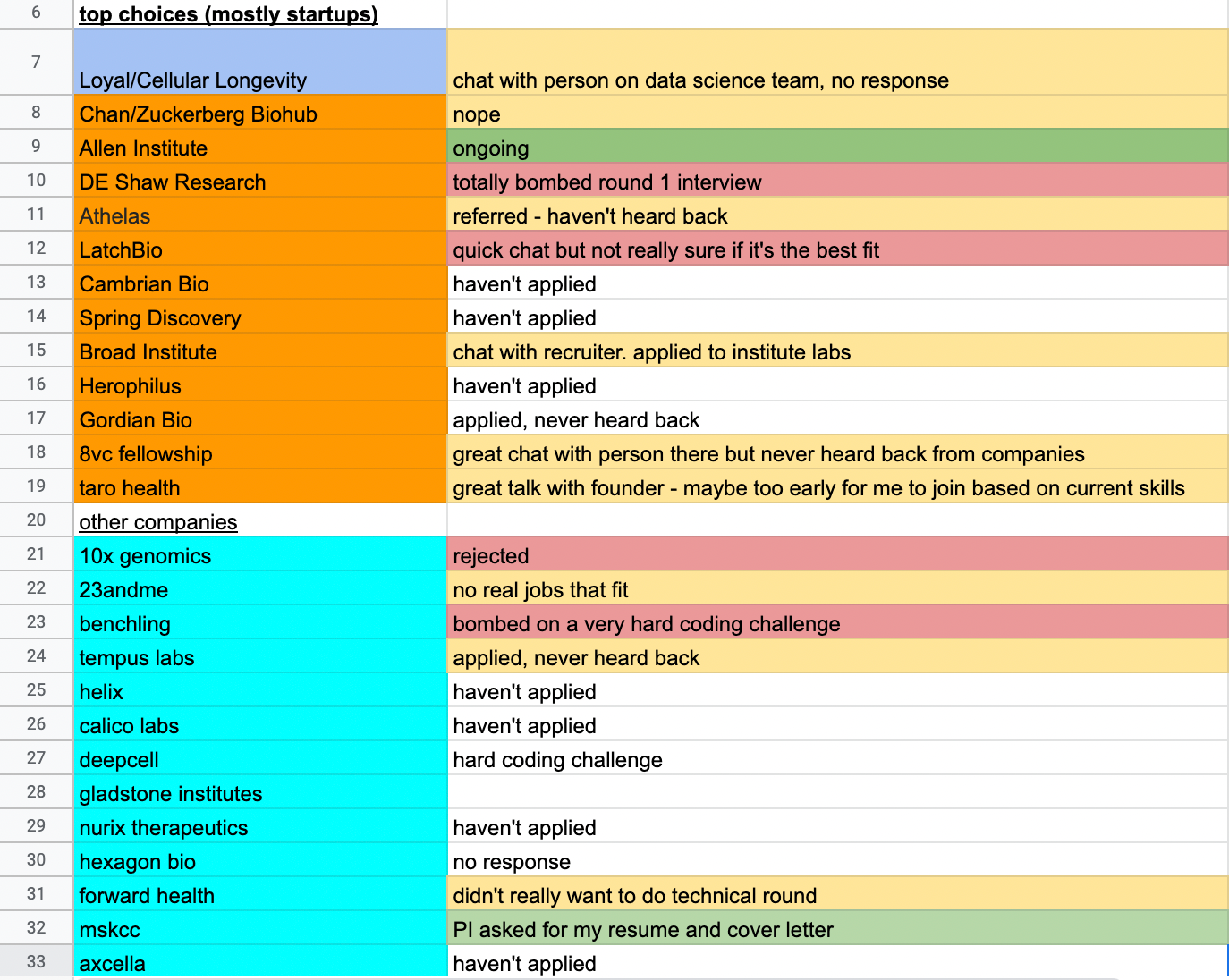
I ended up talking to 30 companies over the course of four months, ultimately choosing to join the Allen Institute for Cell Science as an engineer on the modeling team. This move lets me continue to model cells and understand cell behavior but also exposes me to a number of different techniques to do it as I move from biophysics to deep learning and image models. I’m excited to integrate different types of cell information with the goal of developing a more complete model of the cell.
The Allen Institute for Cell Science is to create dynamic and multi-scale visual models of cell organization, dynamics and activities that capture experimental observation, theory and prediction to understand and predict cellular behavior in its normal, regenerative, and pathological contexts.
Some Closing Thoughts
There is benefit in trying something way outside your background. The job I chose will have me work on things that are closely related to my research background but I think that exposure and immersion to things outside your niche are valuable and allow you to better understand yourself and your motivations. The skills you gain working in biotech/computational biology are largely transferrable as long as you grow both technically and as a scientist. Being excited about the work and people you’re going to work with matter more than anything else.
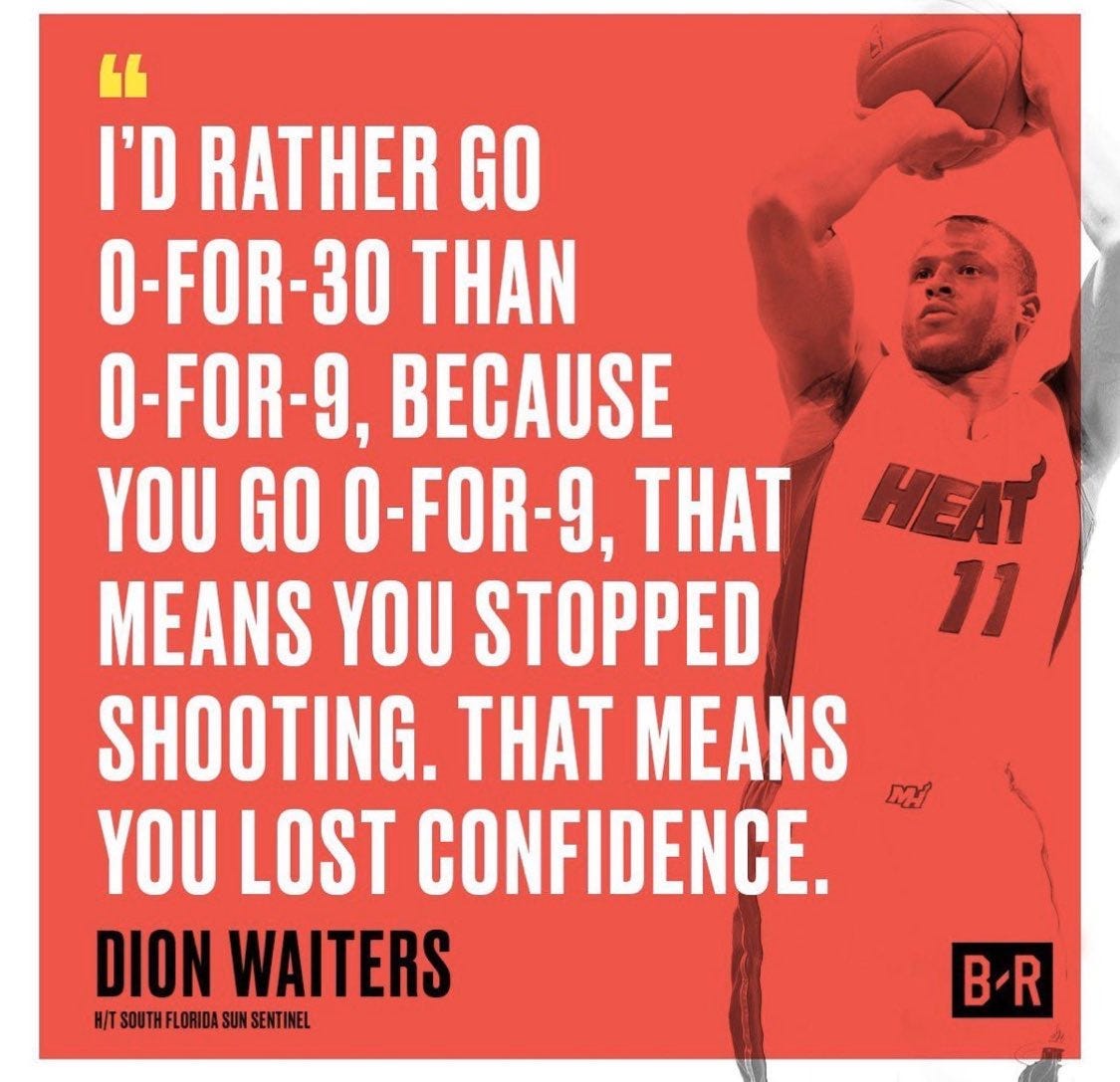
Rejection is usually not related to you, but that doesn’t mean there aren’t takeaways from it. As I started working and saw glimpses of the other side of recruiting looks like, I realized that a lot of my internal narrative during the recruiting process was misguided. There’s so much timing, circumstance, and luck that goes into landing a job that you really want and so much of this is out of your control. With that being said, sometimes non-circumstance rejections can be avoided by bringing your best, most positive self to an interview and realizing that people liking you matters. It changes the game because it becomes less about meeting every expectation on their requirements and more about showing you can get there and what you’re about. Particularly for less specific job listings, a willingness to learn and caring about a company’s vision goes a very long way.
If you want something, make that clear. There are really no rules to this so be intentional. Your application can be much more than your resume. Sending enthusiastic messages after applying or an interview shows people that you’re genuine and you care. The people who would appreciate those messages are the same people who would see you holistically.
I sincerely appreciate you reading this. I’m all ears for any comments, thoughts, or questions you may have.